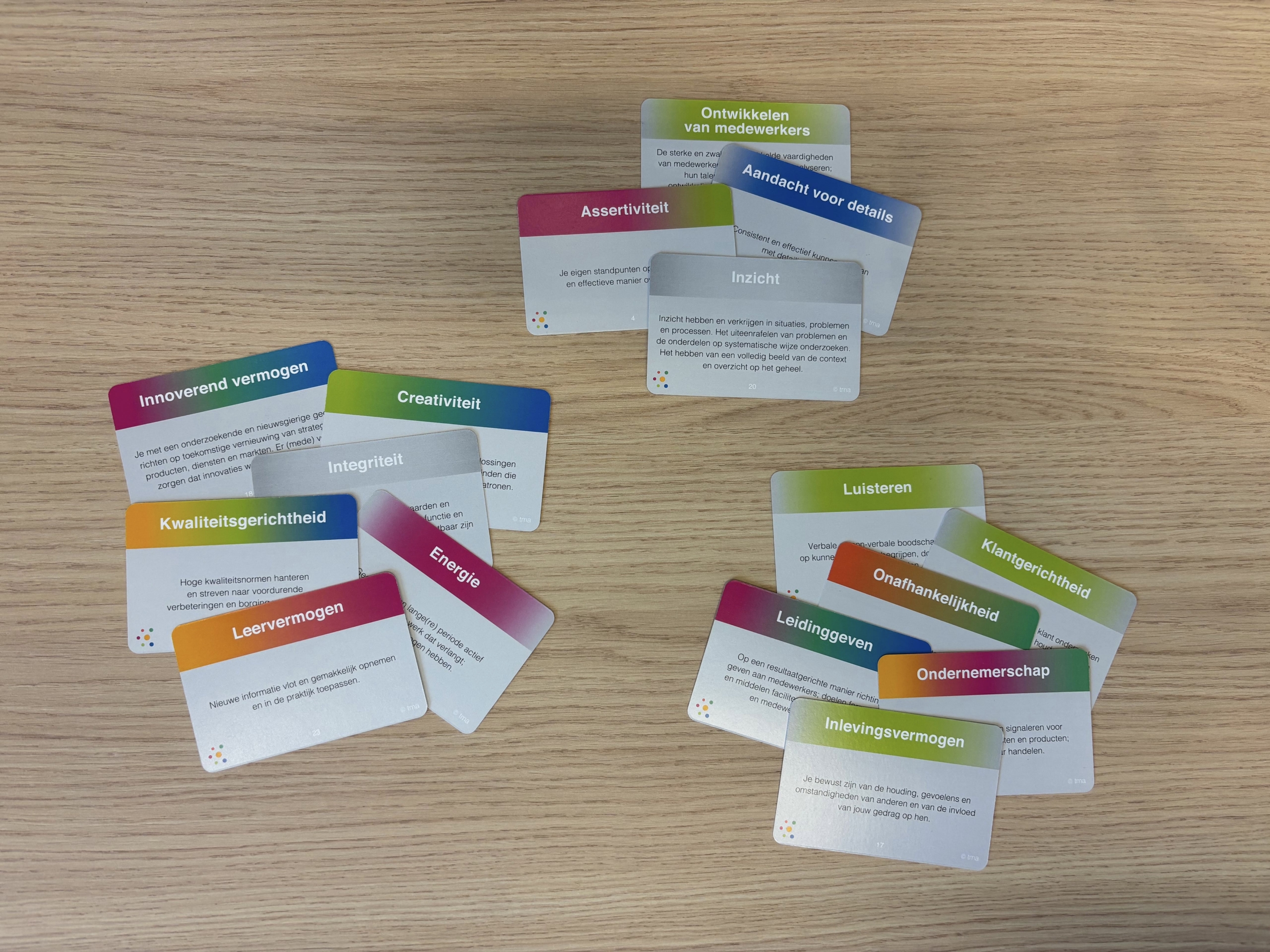



People make the difference at NEDCON. Their growth is the growth of our organization. That’s why we have started using the TMA method: a Talent Motivation Analysis that provides clear insights into someone’s natural talents and intrinsic motivations. In this blog, Roel, our Learning & Development Manager, explains what TMA is, why we apply it at NEDCON and what the experiences have been so far.
Why TMA fits NEDCON
We were looking for a method that aligns with our people focused culture. TMA fits perfectly because it looks at development without putting people into categories. It helps you understand who you are and where your strengths lie.
“The biggest added value is that a TMA assumes that you are who you are,” Roel says. “It is phrased positively and focuses on where your talents lie and what gives you energy.”
According to Roel, that fits seamlessly with how we view growth at NEDCON: “We believe that when our people develop, our company develops.”
How TMA works in practice
TMA has now been used at NEDCON for nearly three quarters of a year. Although the implementation is still ongoing, the foundation is solid. The new job framework aligns with the competencies measured by TMA, making it increasingly clear for employees which development and career opportunities suit them.
Whenever an employee or department wants to conduct a TMA, the process always starts by defining the goal. Roel explains: “We start by identifying the purpose for using TMA. This ensures that TMA is never just a standard test, but truly tailored to the question of the colleague or team working with it.”
TMA can be applied in different ways. Often, it is used for personal development: discovering your talents, how you work and what you need to grow. But it also adds value in team development, recruitment and performance development.
What colleagues gain from it
According to Roel, TMA clearly shows that behavior is often linked to underlying drives and talents you may not always be aware of and that only become visible when you take the time to reflect. That recognition makes the analysis especially valuable. Many colleagues say that TMA puts into words what they already felt deep down but never articulated so clearly.
Roel hears mostly positive feedback: “The recognition is generally strong and colleagues appreciate the personal approach.”
TMA as a strength in teams
Many employees use TMA when thinking about their future or exploring where their strengths lie. But it also plays an important role within teams. When a team understands the talents each person brings, it becomes clear how colleagues complement each other, why some collaborations run smoothly and where opportunities still lie.
This makes TMA valuable not only for individual growth but also for strengthening team collaboration. According to Roel, this allows teams to become stronger internally and better equipped to respond to what the organization and customers need.
Looking ahead
Within NEDCON, TMA is becoming increasingly integrated into development and collaboration. Roel sees this clearly: “I think TMA will play an important role in the development of our employees and therefore also in the development of the organization.”
Or, as TMA puts it: Everything gets better when you know where your talents lie.